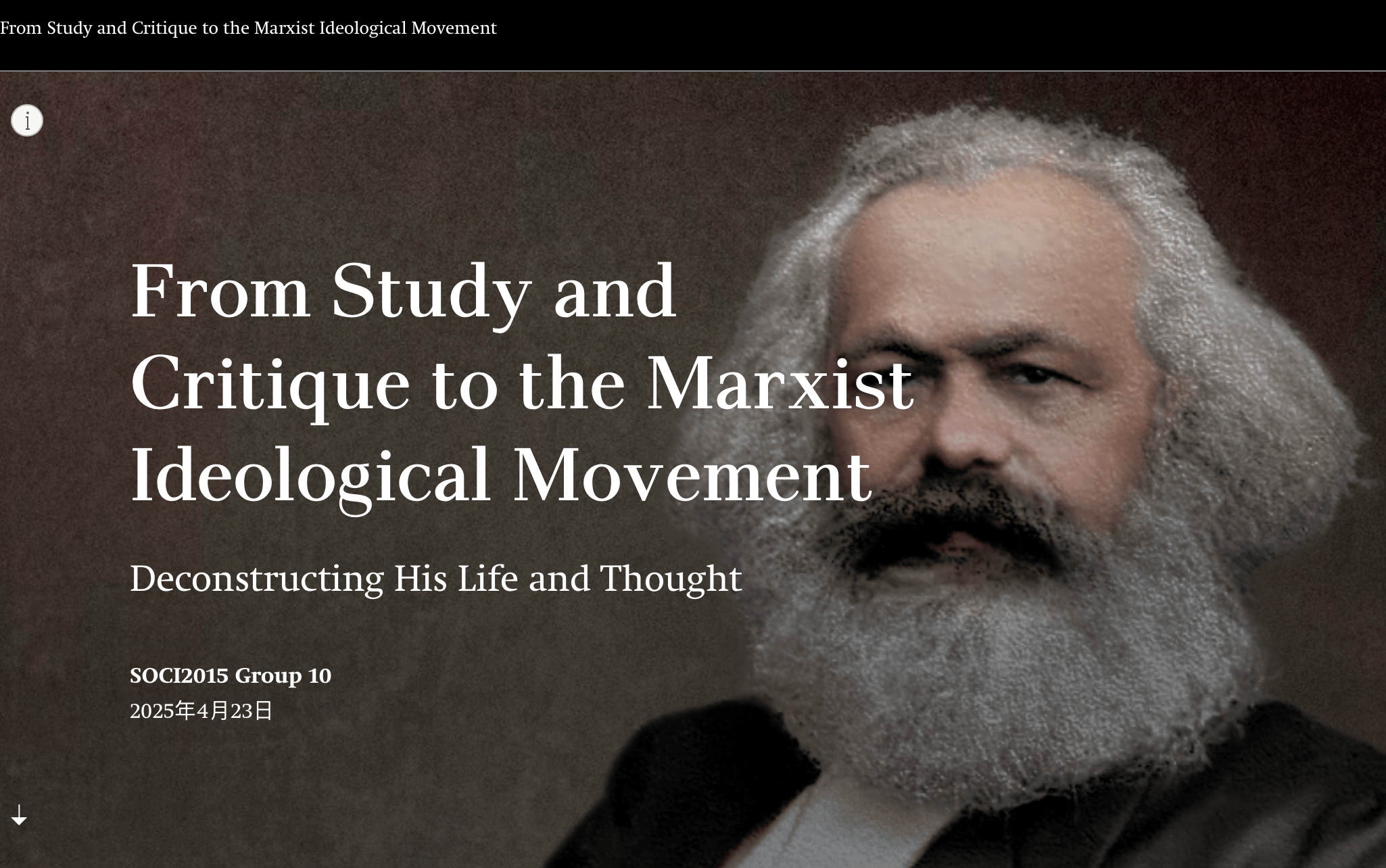
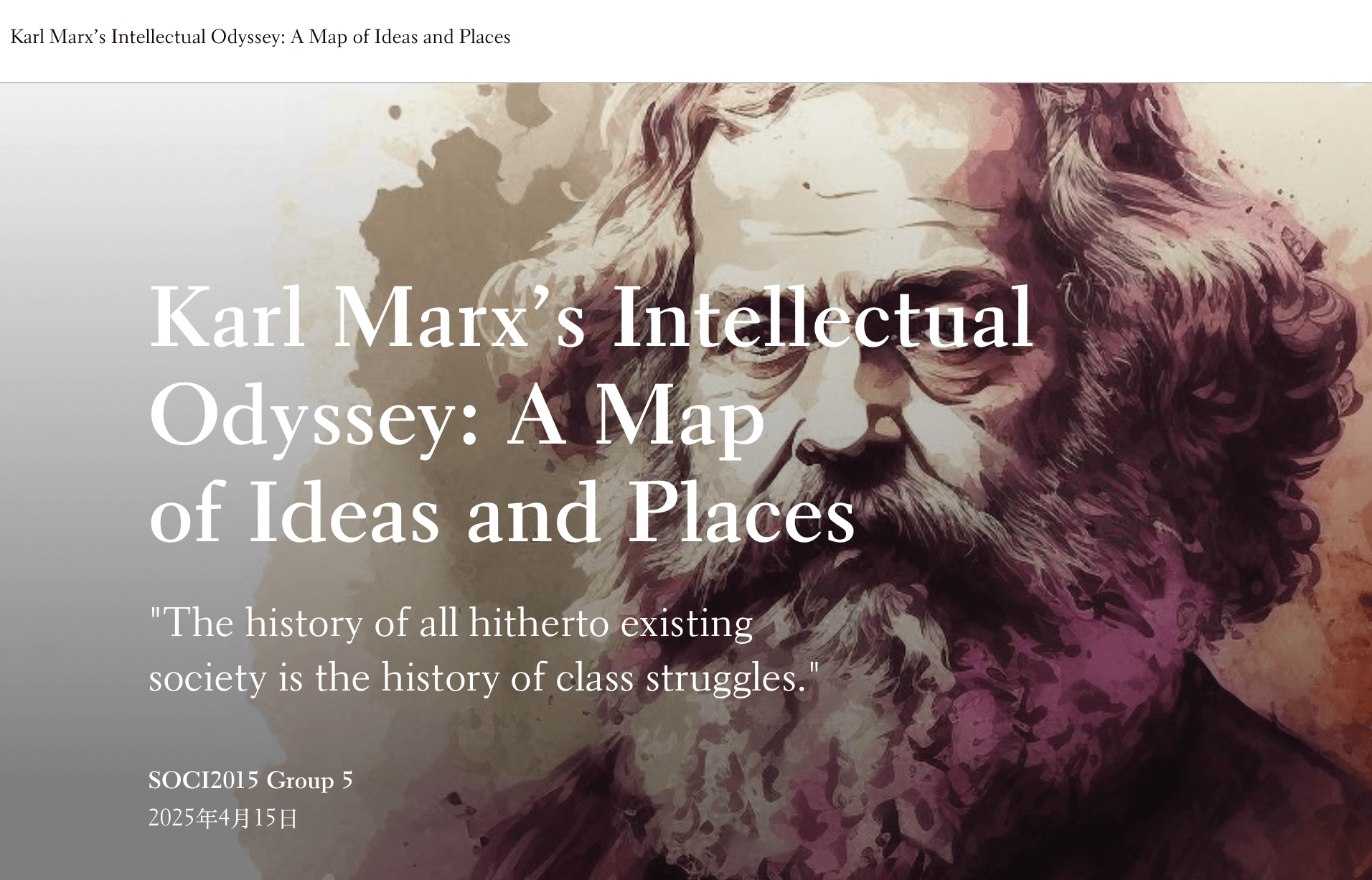
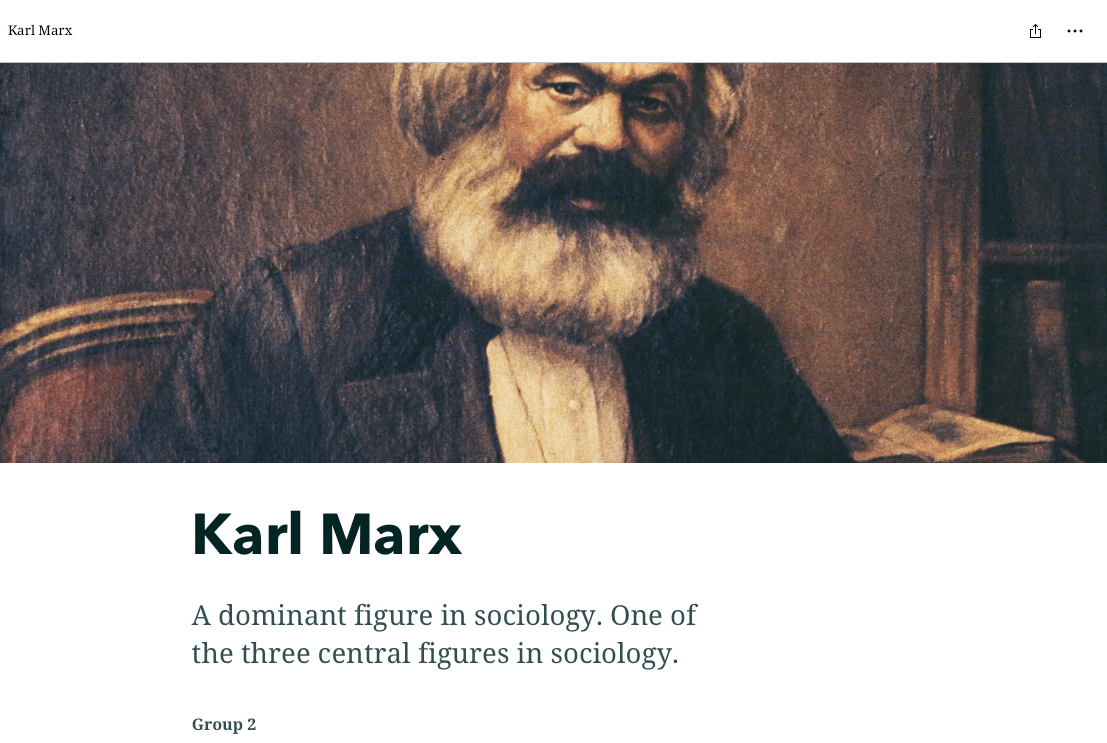
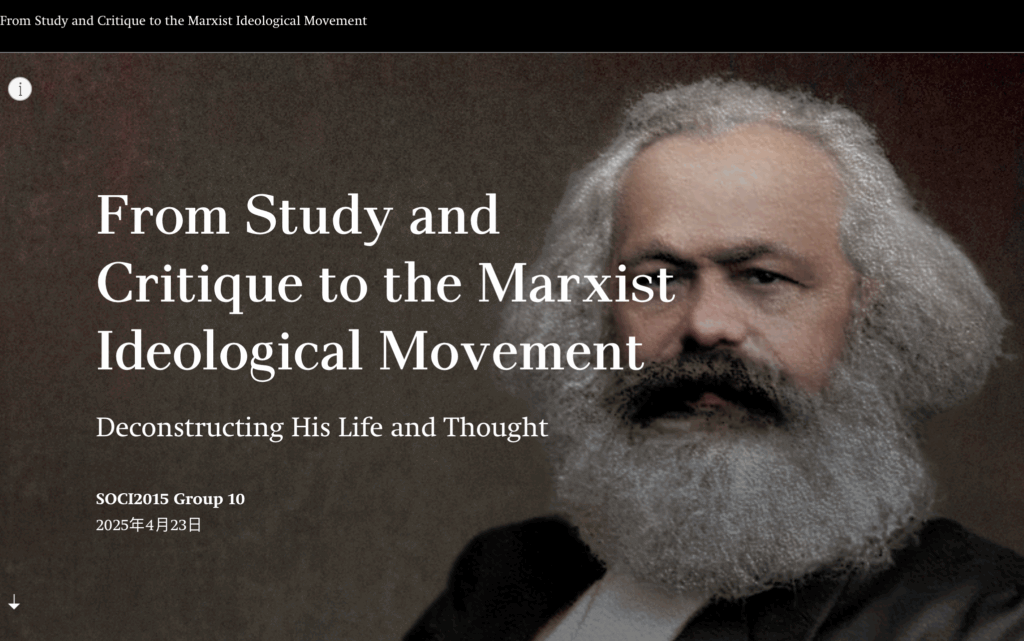
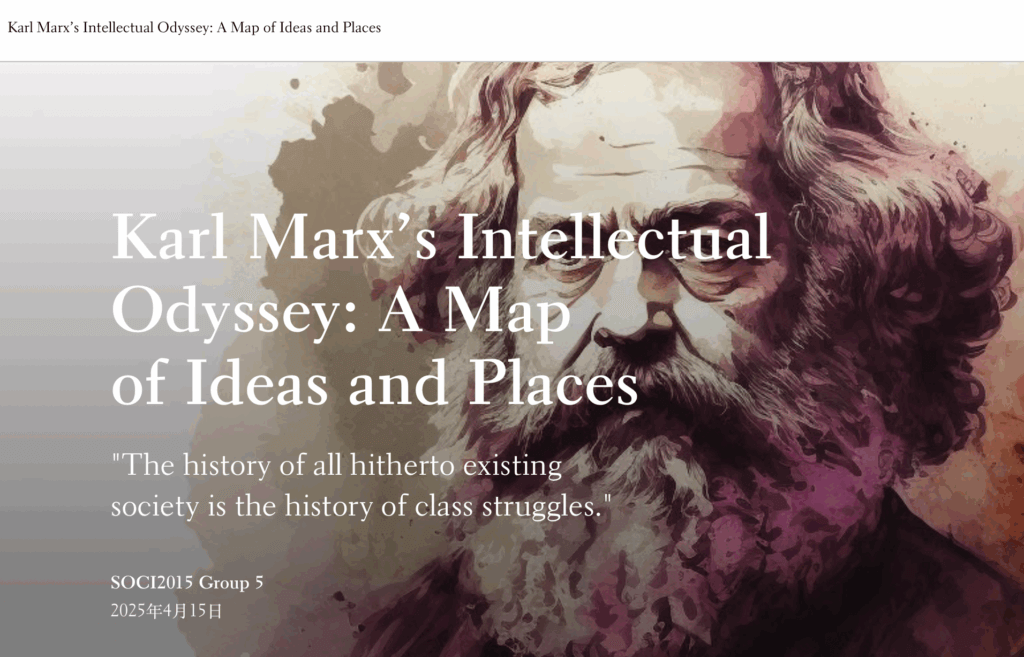
Karl Marx (1818-1883). What will you think immediately about him? Communism, Revolution, or A big old man. As one of the most influential thinkers in modern history, Marx’s revolutionary ideas reshaped modern philosophy and created
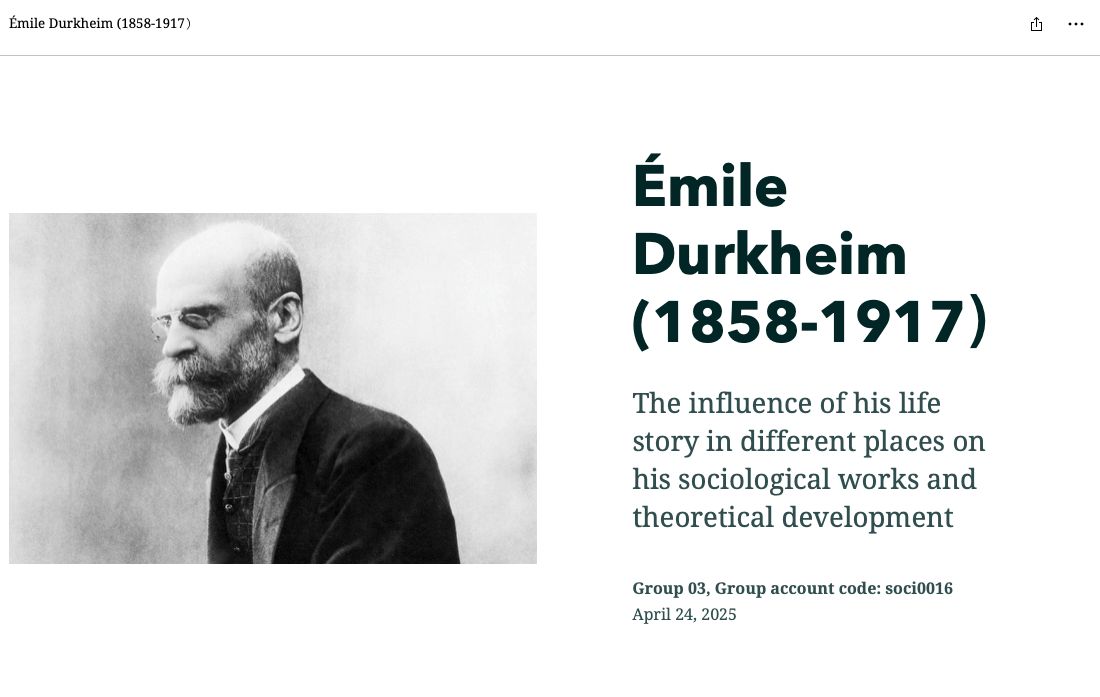
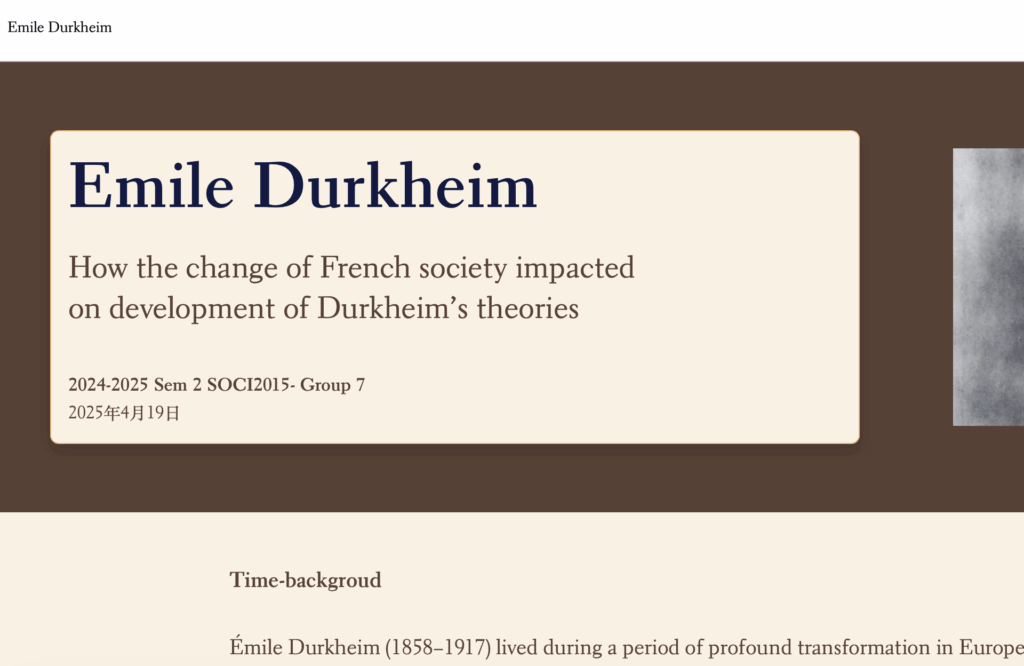
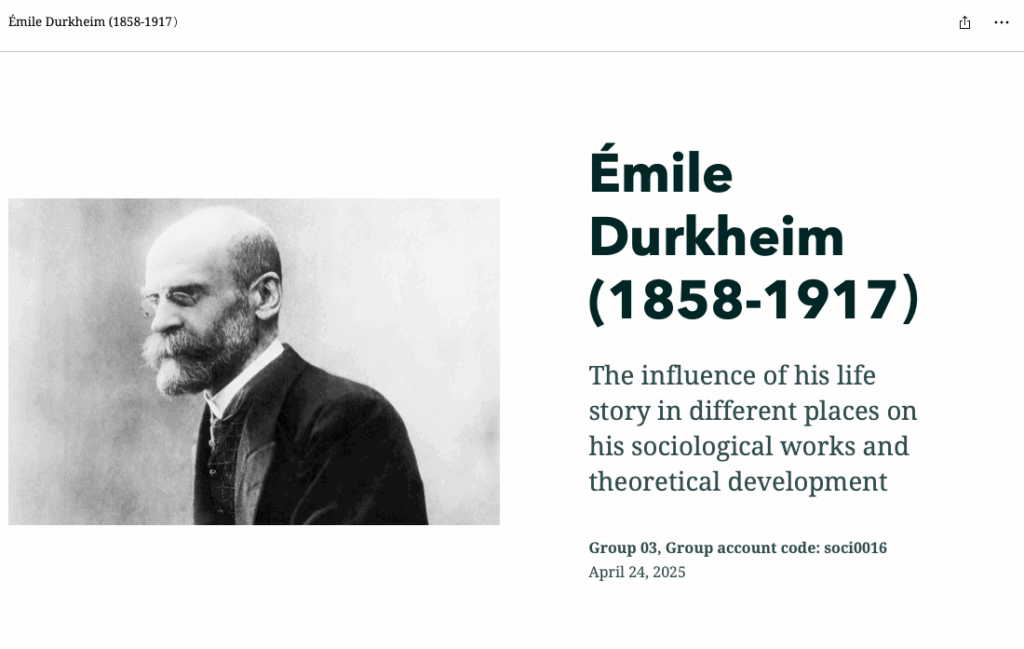
Émile Durkheim (1858–1917) lived during a period of profound transformation in Europe. The Industrial Revolution accelerated social transformation. As a result, rapid urbanization and industrialization dismantled traditional agrarian societies, while intensified social division of labor
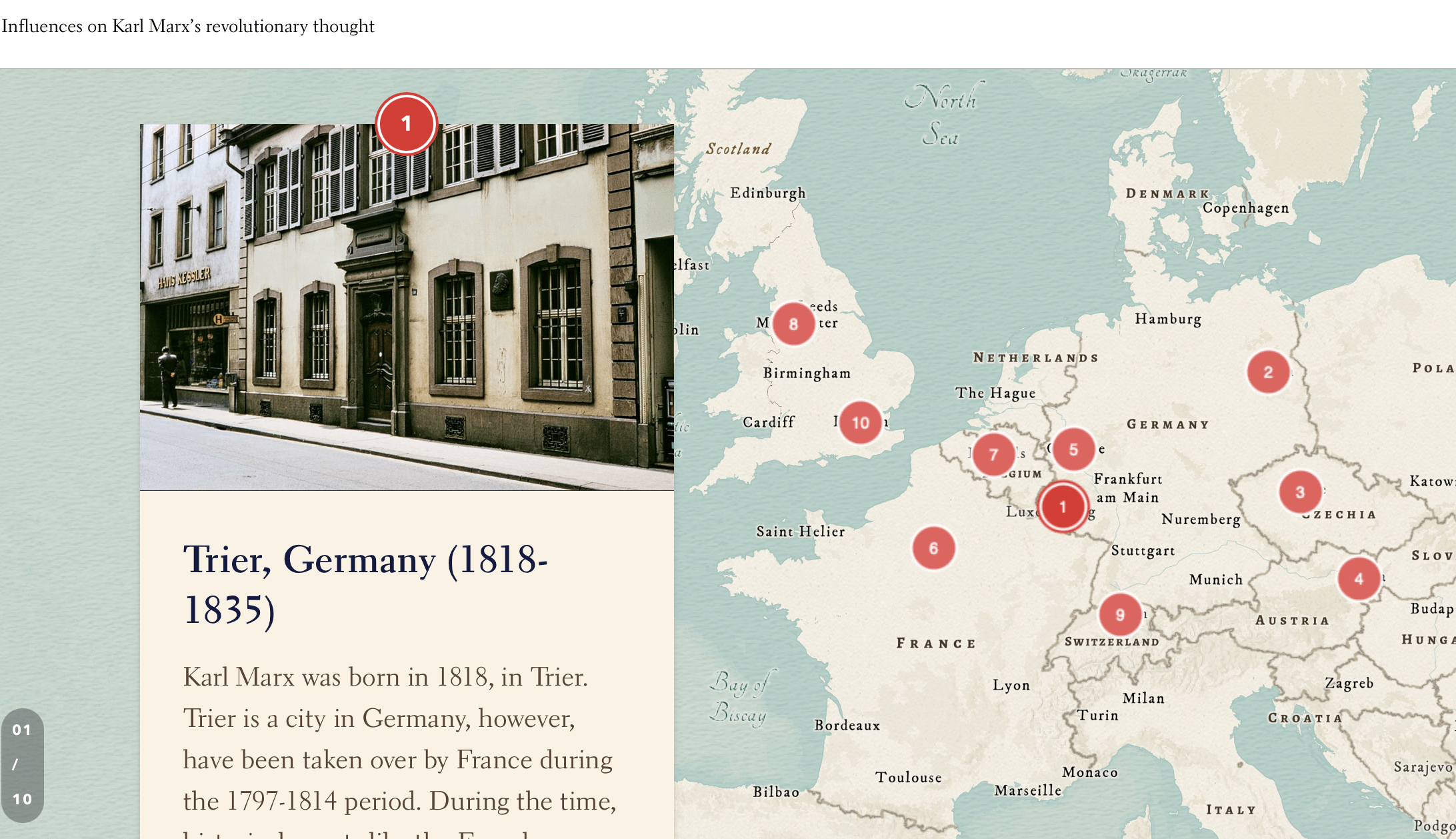
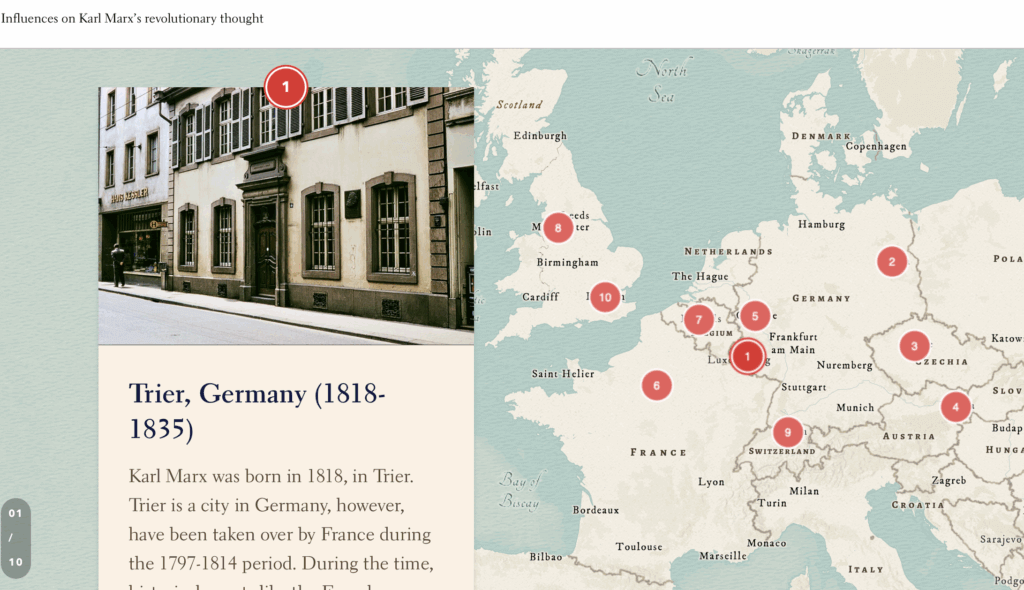
n this digital map, we aim to explore the life and ideas of Karl Marx, with a specific focus on ten locations which are closely related to Marx’s work. The locations include Trier, Berlin, Prague,
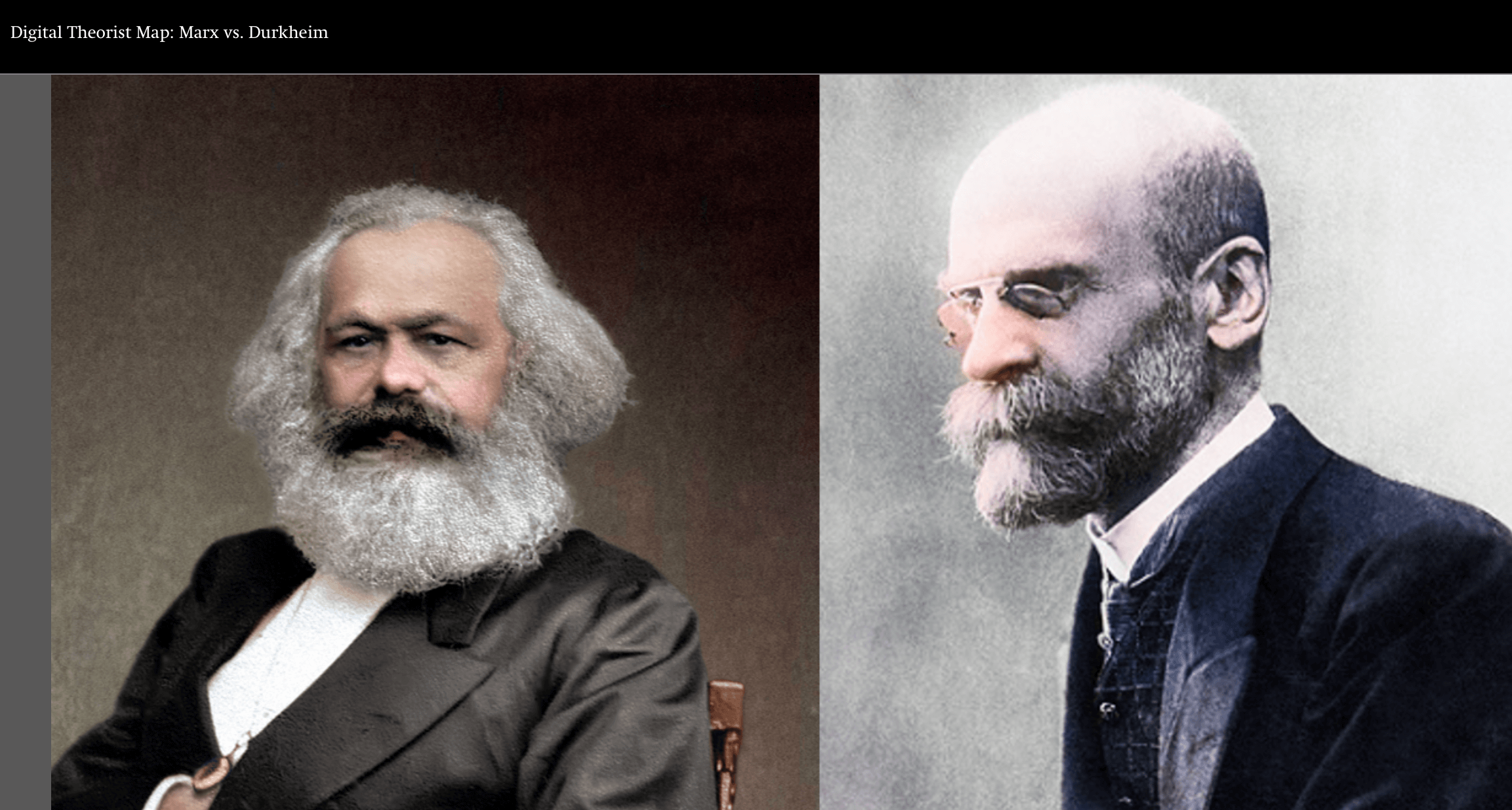
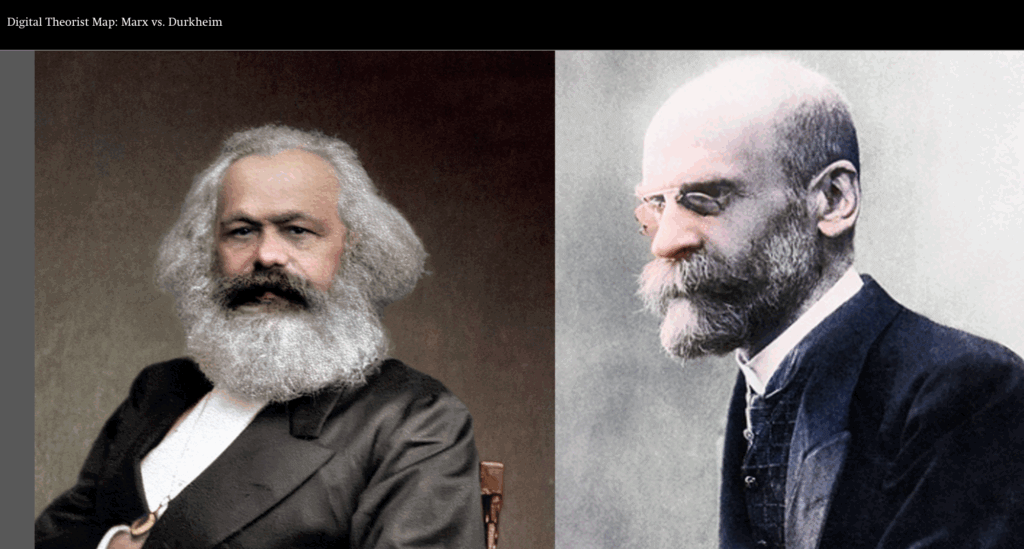
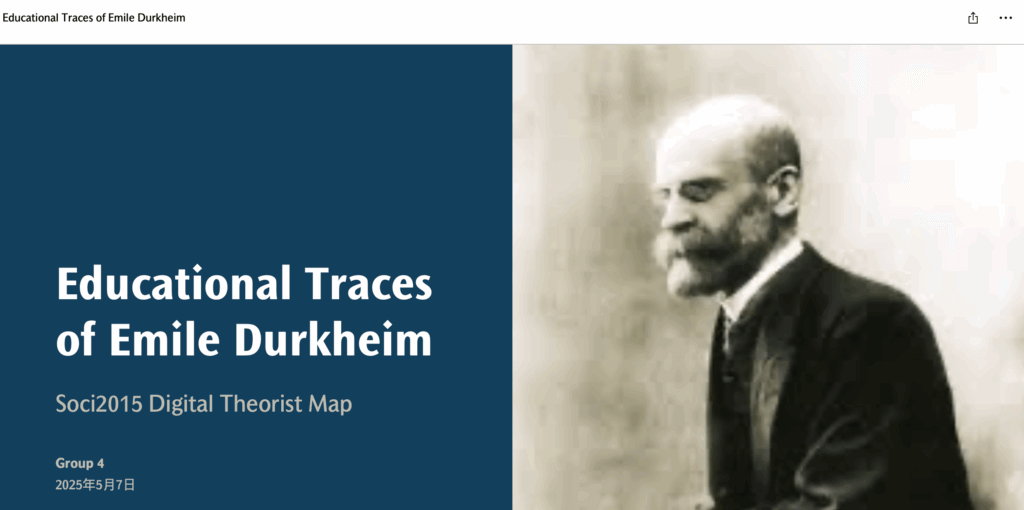
In this Digital Theorist Map, we are going to compare the works of Karl Marx and Emile Durkheim to show the sociologist theory views similarity and differences. The reason why choosing Marx and Durkheim to
This map shows the 11 most important locations for studying Karl Marx. In this test, the influence of these places on him will be summarized. Karl Marx’s life was marked by dramatic change and widespread
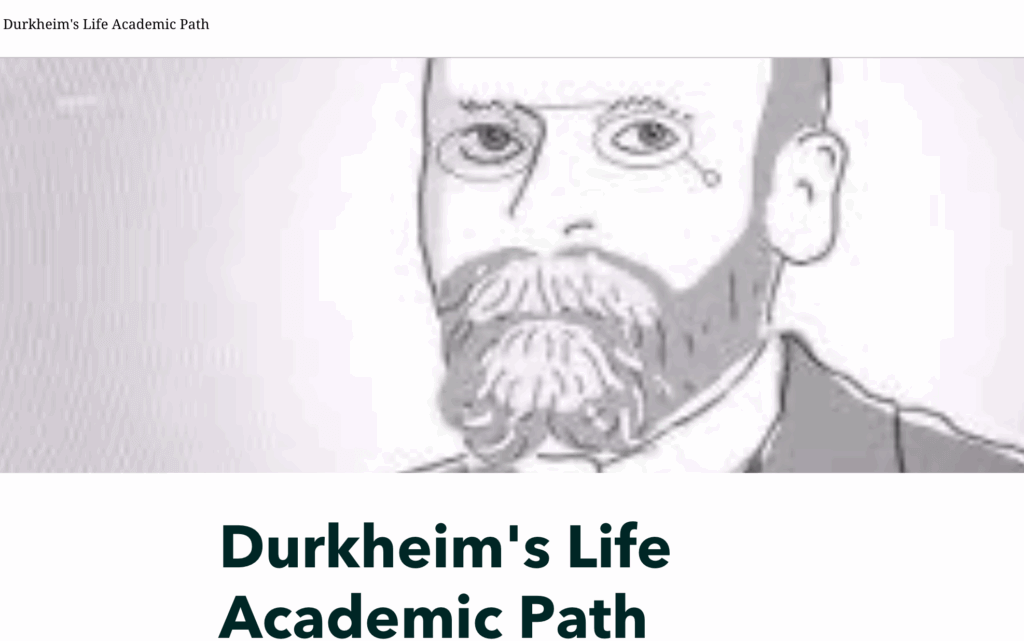
Émile Durkheim (1858–1917) is widely regarded as one of the founders of sociology. His texts established the cornerstone for the scientific examination of society with a focus on social organization, common norms, and empiricism. This
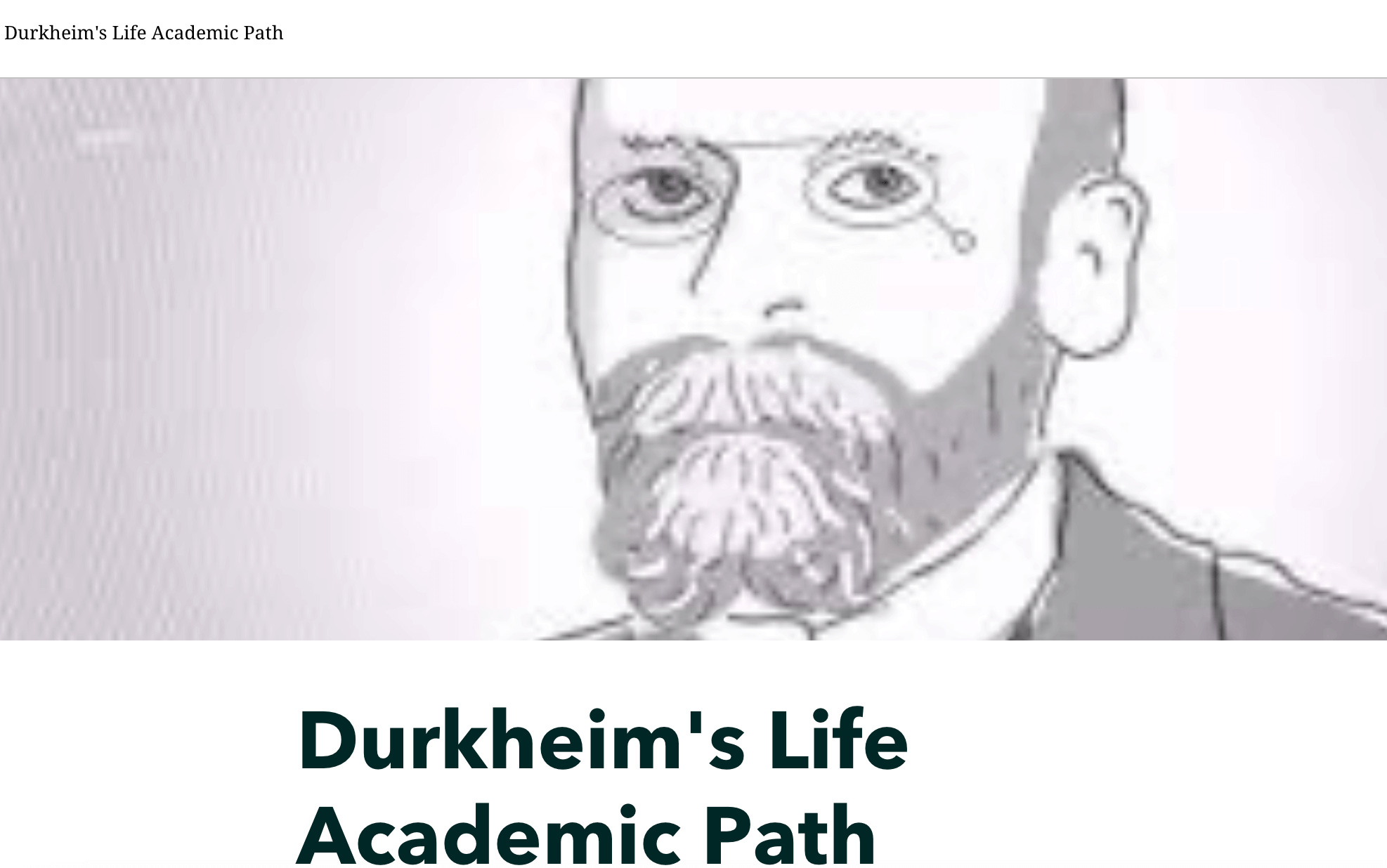
Emile Dukheim was a French sociologist in the late 19th and 20th century (1858-1917), who was the establisher of sociology as an academic discipline. He was also well-known for theories such as functionalism, division of
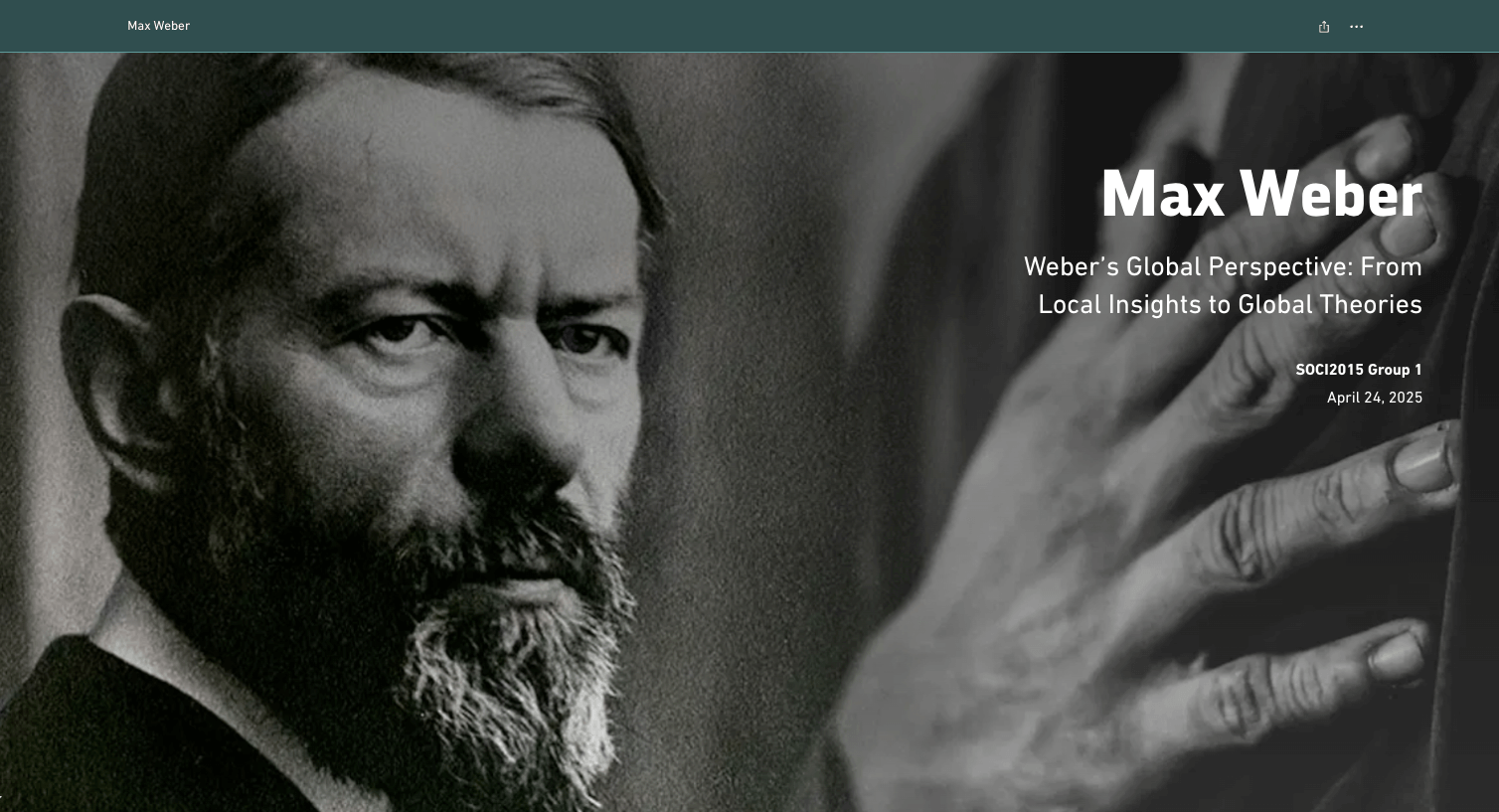
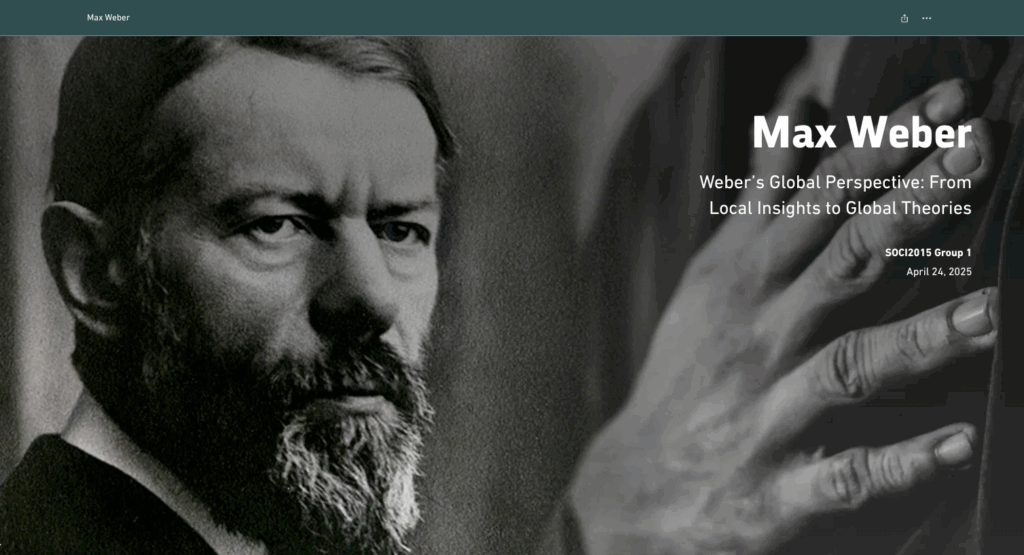
Our story begins in 19th-century Germany, where a brilliant thinker named Max Weber (1864–1920) set out on an epic quest—not with a sword, but with a pen and an insatiable curiosity! A sociologist, philosopher, and
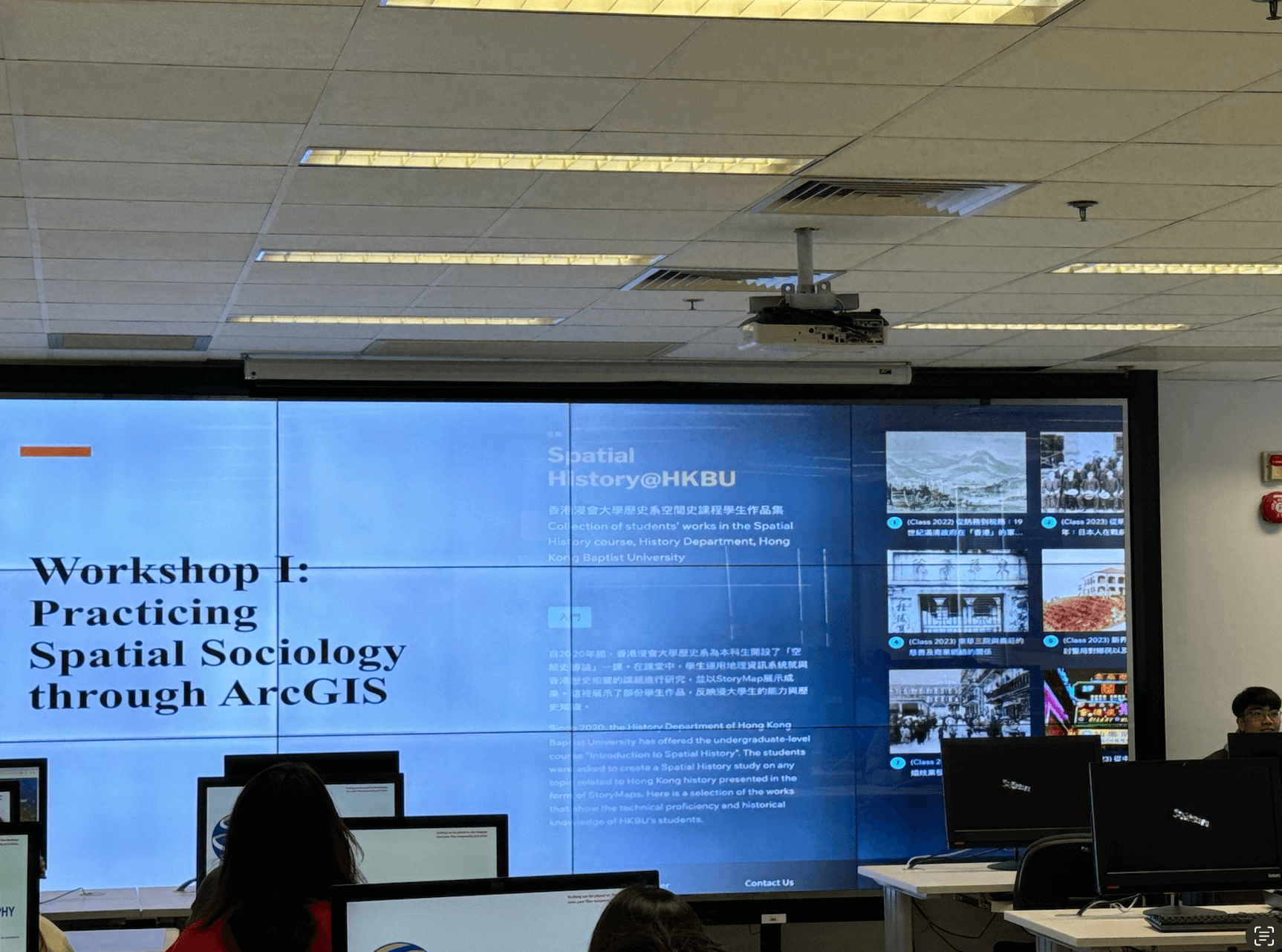
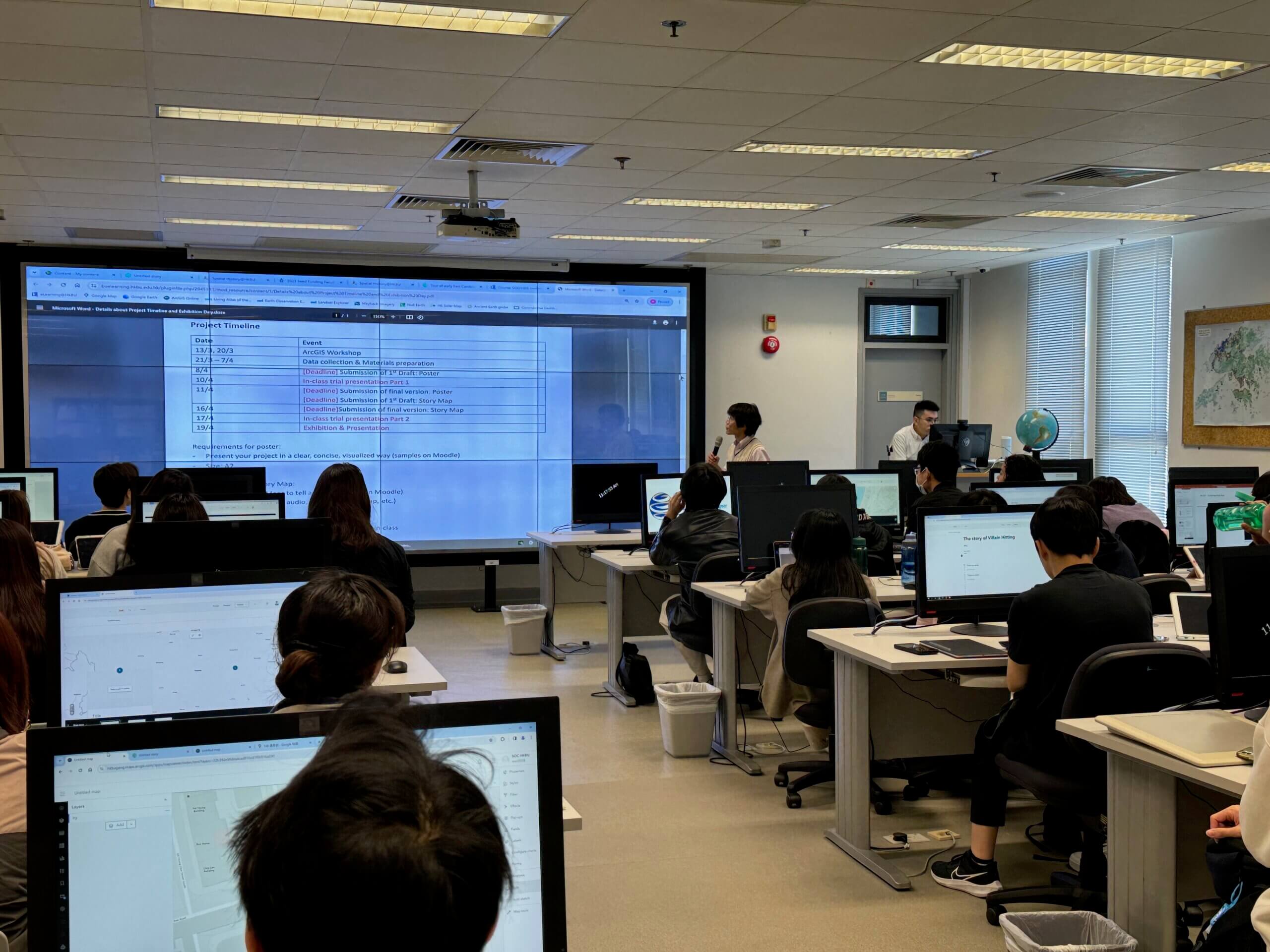
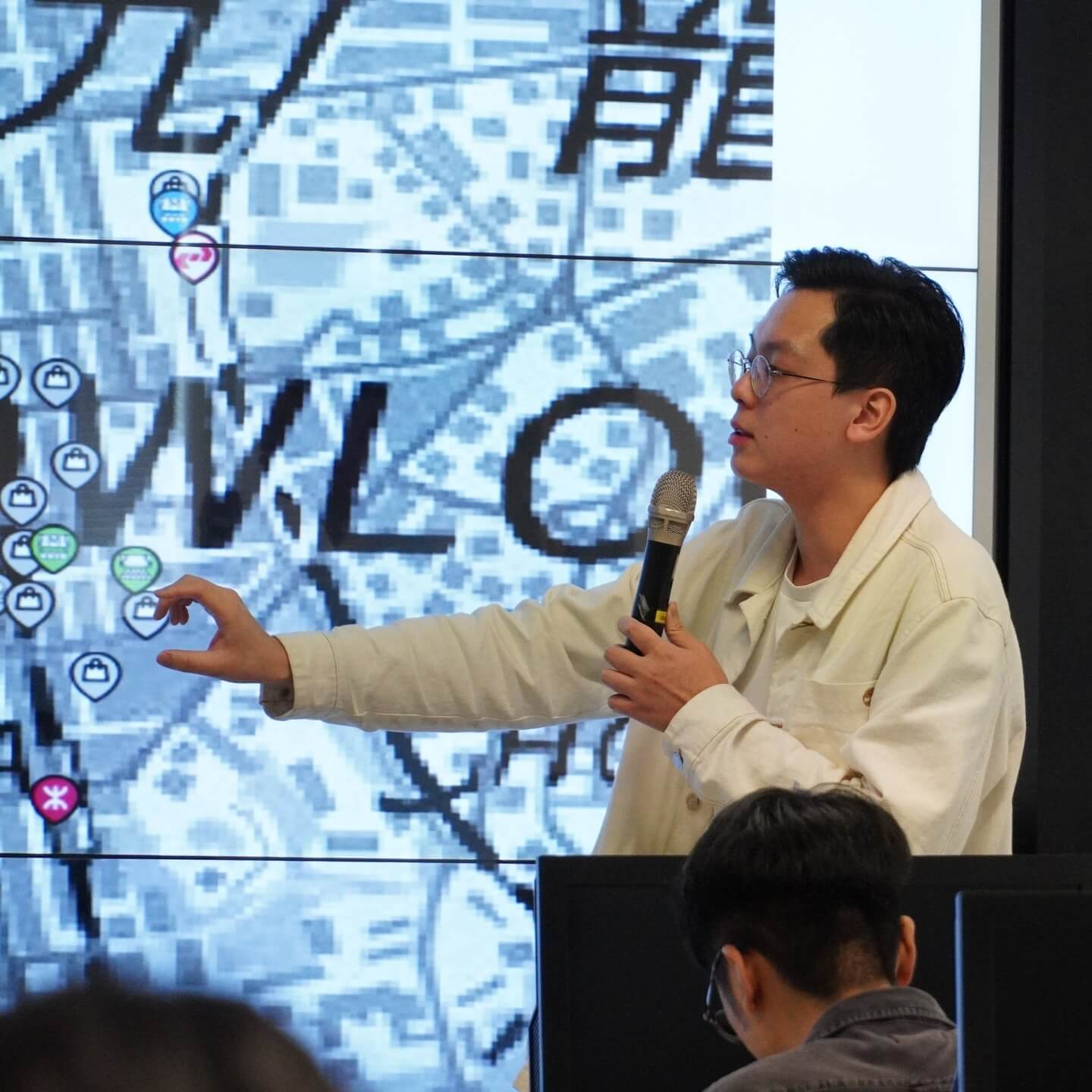
This originates from one of the new initiatives to incorporate new blended learning pedagogy into one of the foundation social science courses (SOCI1005 Invitation to Sociology). This will showcase the innovative works of our social sciences students who have utilized Geographical Information System (GIS) technology to create engaging online documentaries and informative posters.
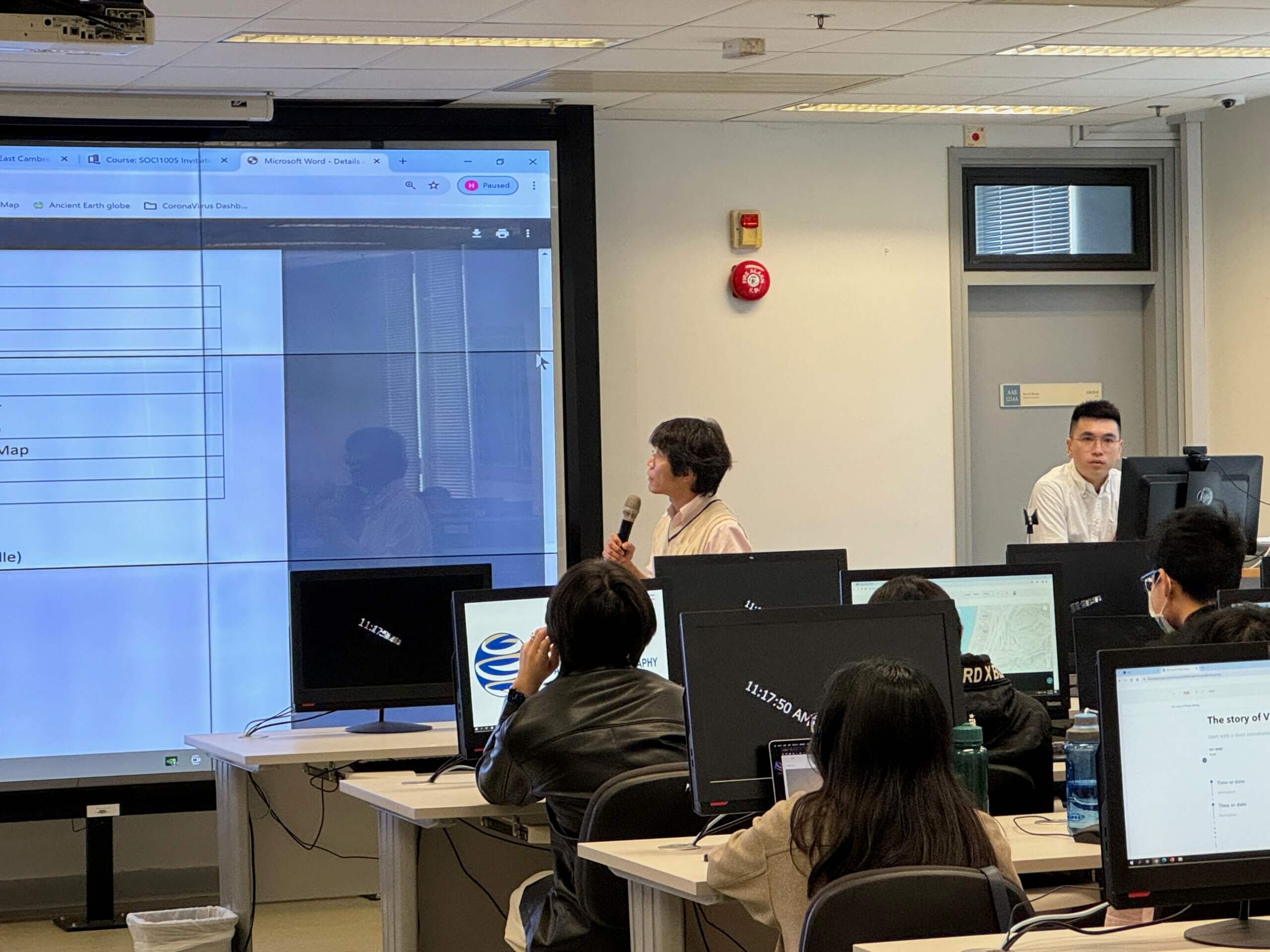
This website will also reveal various blended learning experiences utilized in the course, including: in-class experimental learning workshop, on-site community field studies, outside-classroom learning and engagement with community stakeholders, etc.
This is a testament to our commitment to blended learning, a pedagogical approach that integrates traditional classroom methods with modern technological advancements to provide a comprehensive educational experience.